
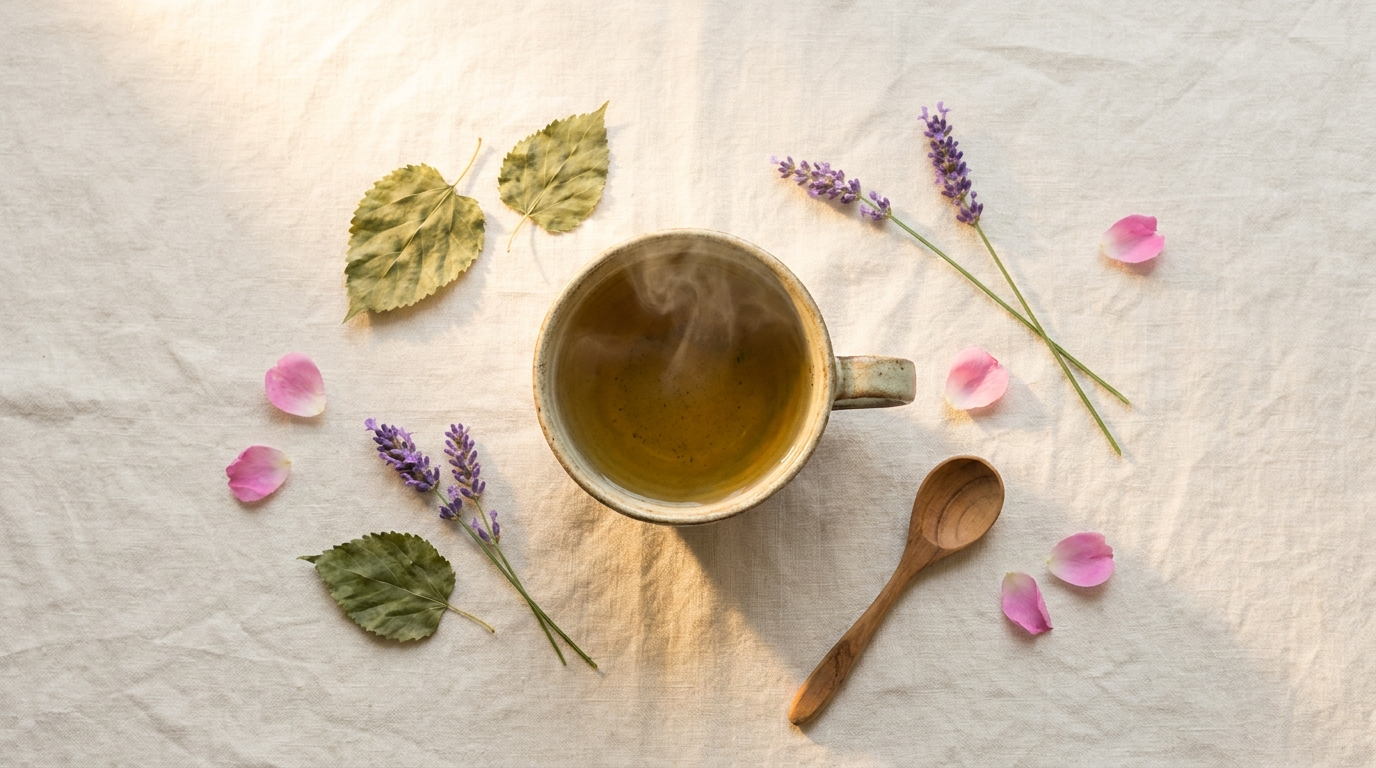
The sleep tea aisle has a problem. Every box on the shelf promises calm and rest. Most are gentle, vaguely pleasant, and not quite enough to actually shift a busy mind into sleep.
This guide is the one we wish existed before we started blending sleep teas ourselves. We have read the research, brewed every herb on this list, and worked with our suppliers in Japan to understand which botanicals actually earn a place in an evening cup. Below is the honest version: what each tea does, what the science actually says, and one Japanese tea that almost no Western "best sleep tea" list mentions.
What makes a sleep tea actually work
A useful sleep tea needs three things.
First, it has to be naturally caffeine-free, so it does not work against your body's wind-down rhythm. Many green and black teas are marketed as relaxing, but a small dose of caffeine right before bed can disrupt sleep architecture even if you do not feel it.
Second, it should contain botanicals with real evidence for sleep onset, anxiety reduction or nervous-system support. A pretty box and a generic herb mix will not change your night.
Third, and most underrated: the cup has to function as a ritual. A consistent 30 quiet minutes around the drink trains your nervous system to recognise that the day is over. The chemistry helps. The signal does more.
A useful warning before we go further: most published research on these herbs uses concentrated extracts or capsules, not the steeped tea you brew at home. The effects in tea form are usually milder. We will stay honest about that throughout.

The 8 best sleep teas, compared

1. Chamomile (Matricaria chamomilla)
The household name. Light, slightly apple-like, well tolerated. Contains apigenin, a flavonoid that binds to GABA receptors and produces mild sedative effects. A 2019 systematic review and meta-analysis of 12 trials found chamomile improved sleep quality and reduced generalised anxiety, though most studies used concentrated extracts. A 2017 trial in elderly adults showed chamomile extract improved sleep quality scores versus control.
Best for: daily soothing cup, mild evening anxiety, beginners.
Caveat: unlikely to shift severe insomnia on its own.
2. Valerian root (Valeriana officinalis)
The heavy hitter. Contains valepotriates and sesquiterpenes thought to boost GABA, the same brain chemistry pharmaceutical sleep aids target. A widely cited 2006 meta-analysis in the American Journal of Medicine concluded valerian might improve sleep, but called for higher-quality trials. Some research finds clear benefit, others find none.
Best for: people who want the most evidence-supported herb for sleep onset.
Caveat: the smell is famously divisive (earthy, socks-like). Switch rates after one week are high.
3. Lavender (Lavandula angustifolia)
The calmer. Best evidence for anxiety reduction, with a clean spillover into sleep. A randomised double-blind trial of an oral lavender oil preparation showed it reduced anxiety as effectively as low-dose lorazepam. A broader review of lavender's nervous-system effects supports its role in stress reduction.
Best for: racing thoughts, stress-driven sleeplessness, end-of-day decompression.
Caveat: lavender-only tea is more soothing than satisfying. Best as part of a blend.
4. Lemon balm (Melissa officinalis)
A gentle herb in the mint family, traditionally used for restless evenings and digestive ease. Pilot trials of lemon balm extract report reductions in anxiety and sleep disturbance after about two weeks of daily use. The taste is bright and slightly citrusy, which makes it one of the most pleasant sleep herbs to drink.
Best for: restless evenings, mild stress, people who dislike floral or earthy flavours.
Caveat: subtle effect. Best paired with a stronger calming herb like lavender or valerian.
5. Passionflower (Passiflora incarnata)
The underrated one. Contains flavonoids that bind to benzodiazepine receptors, the same site anti-anxiety medications target. A small double-blind trial of passionflower tea (41 participants) found improved subjective sleep quality after one week.
Best for: mild anxiety-driven sleep difficulty.
Caveat: rarely sold as a pure tea. Most products combine it with chamomile or lemon balm.
6. Magnolia bark (Magnolia officinalis)
Contains honokiol and magnolol, compounds with mild sedative and anti-anxiety effects in animal studies. Human evidence is preliminary. The flavour is woody and slightly bitter.
Best for: people who like grounding, bitter-leaning flavours and want to try something uncommon.
Caveat: limited human research. Mostly studied in extract form.
7. Banana tea
Made by steeping banana peel or fruit. The idea: bananas contain magnesium and potassium, both linked to muscle relaxation. The reality: most of those minerals do not transfer into the brewed water. Sleep evidence is essentially anecdotal.
Best for: novelty, kitchen experimentation.
Caveat: more a social-media trend than a real sleep tool. We do not recommend relying on it.
8. Kuwanoha (Morus alba / Japanese mulberry leaf)
The tea most Western "best sleep" lists miss. In Japan, kuwanoha (literally "mulberry leaf") has been brewed for centuries as an after-dinner tea. It is naturally caffeine-free. It contains 1-deoxynojirimycin, a compound studied for its gentle effect on post-meal blood sugar. That matters for sleep: steadier evening glucose levels are linked to fewer 2–3am wakings.
Kuwanoha has a clean, slightly grassy flavour that pairs beautifully with calming botanicals. It carries lavender, lemon balm and rose without competing with them, and adds a digestive benefit no other sleep tea offers.
Best for: people who eat late, wake in the early hours, or want a Japanese tradition behind their cup.
Caveat: if you take diabetes medication, mention kuwanoha to your clinician.
We blend kuwanoha into our own evening tea, Kuwanoha Bliss, for exactly this reason. It is the only ingredient we could not source in Australia, so we work directly with a small farm in Japan.
★★★★★"I have had bad sleep for years. Tried magnesium, melatonin, no phone before bed, all of it. Started drinking Kuwanoha Bliss about an hour before bed and I am finally sleeping through the night. I wake up actually rested."

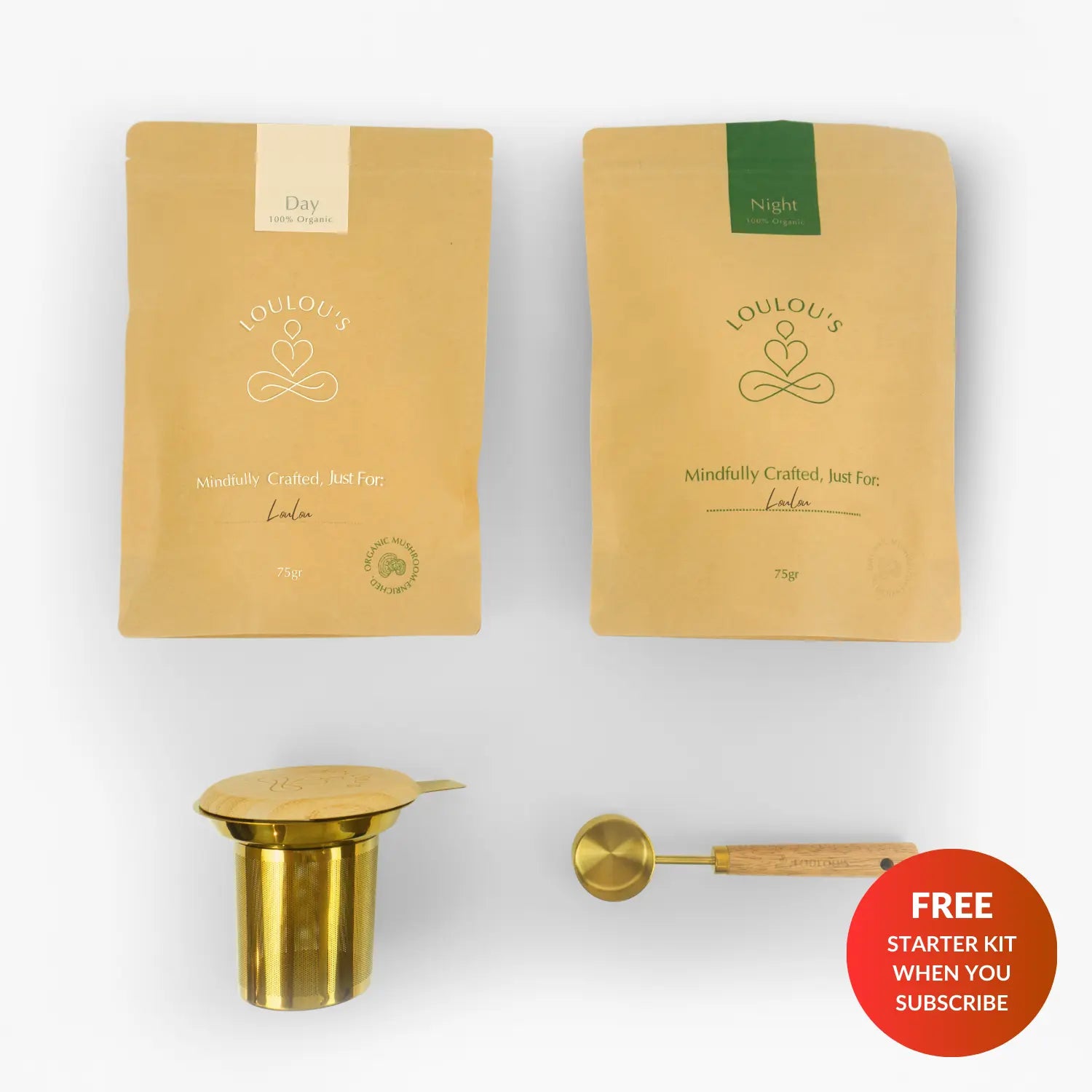
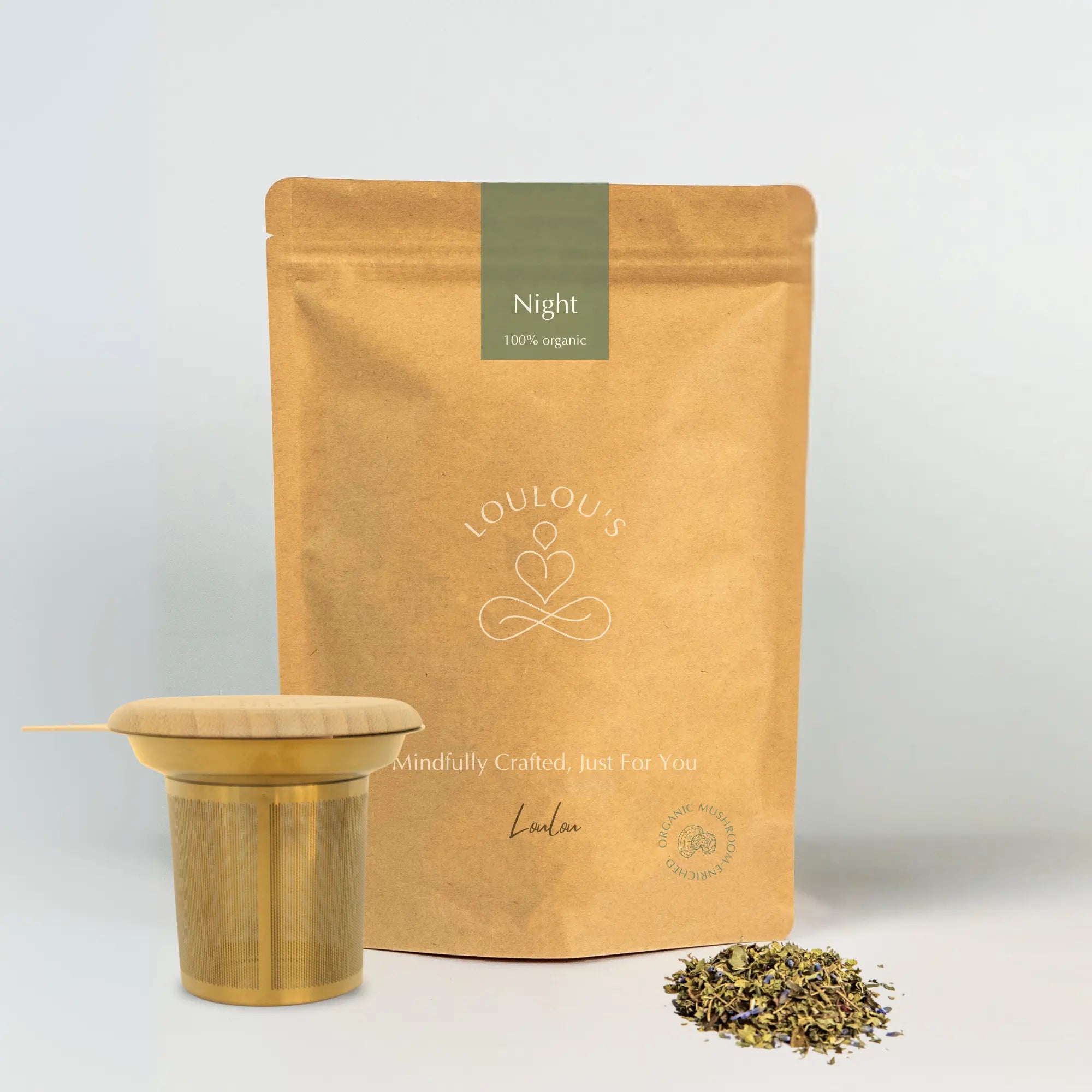
Kuwanoha Bliss
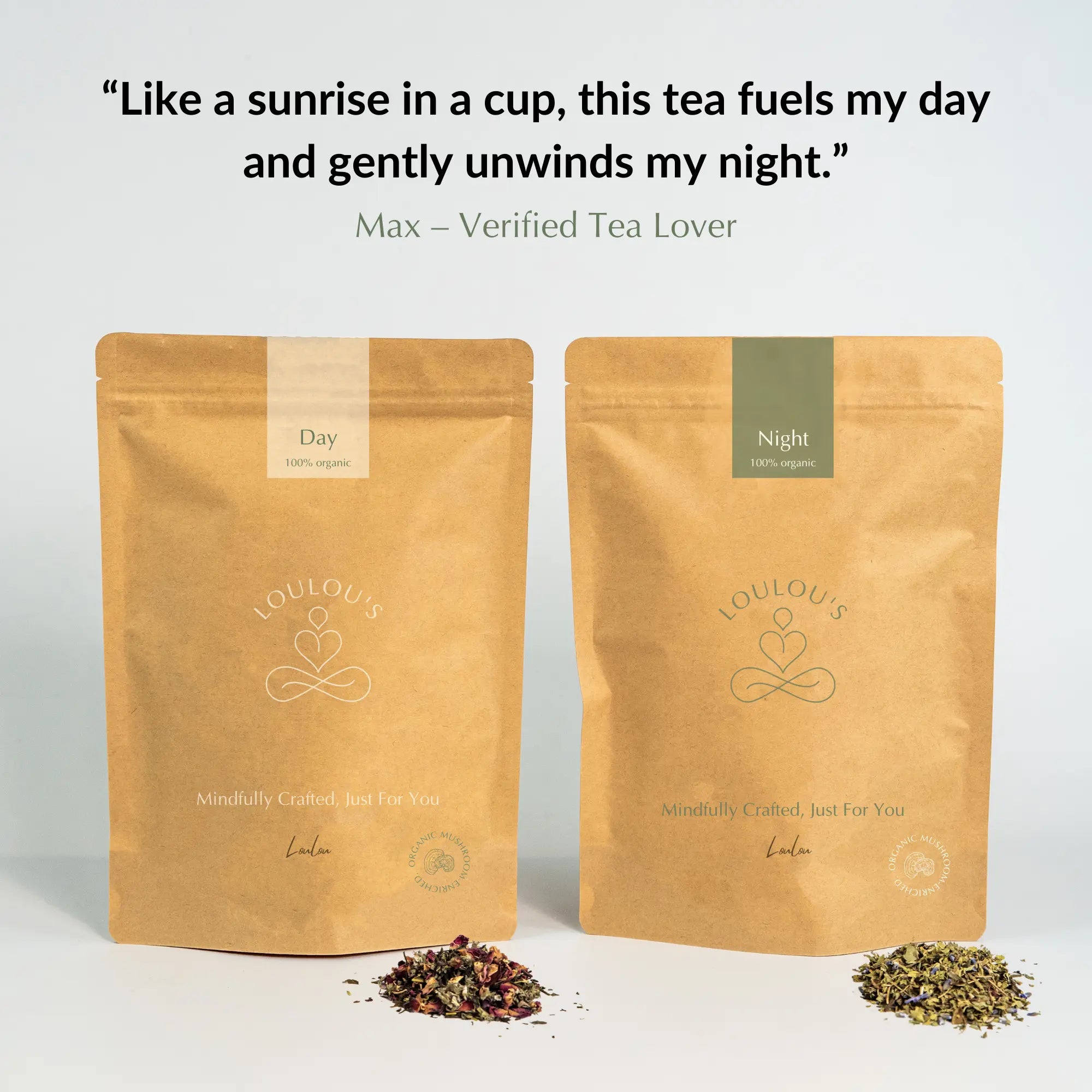
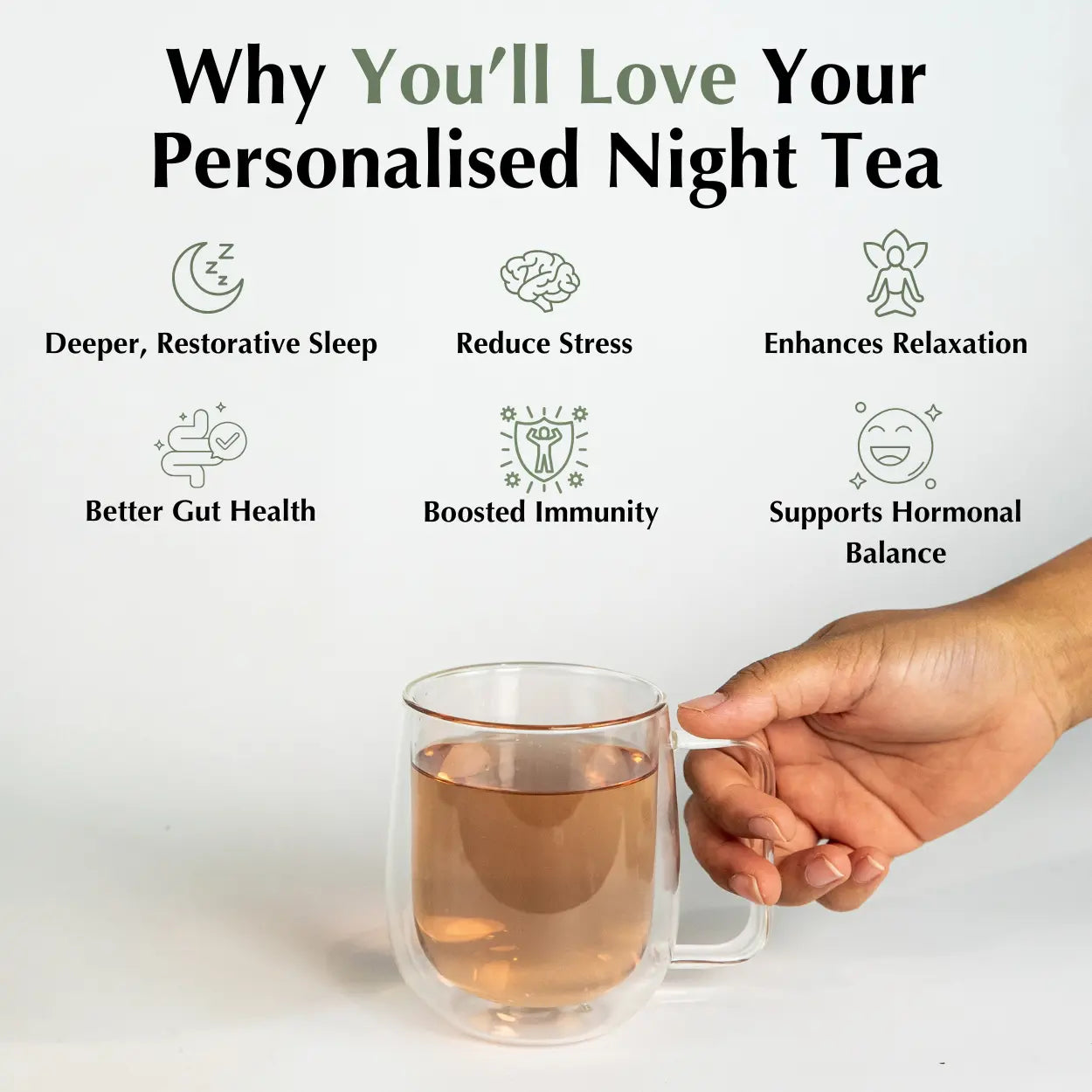
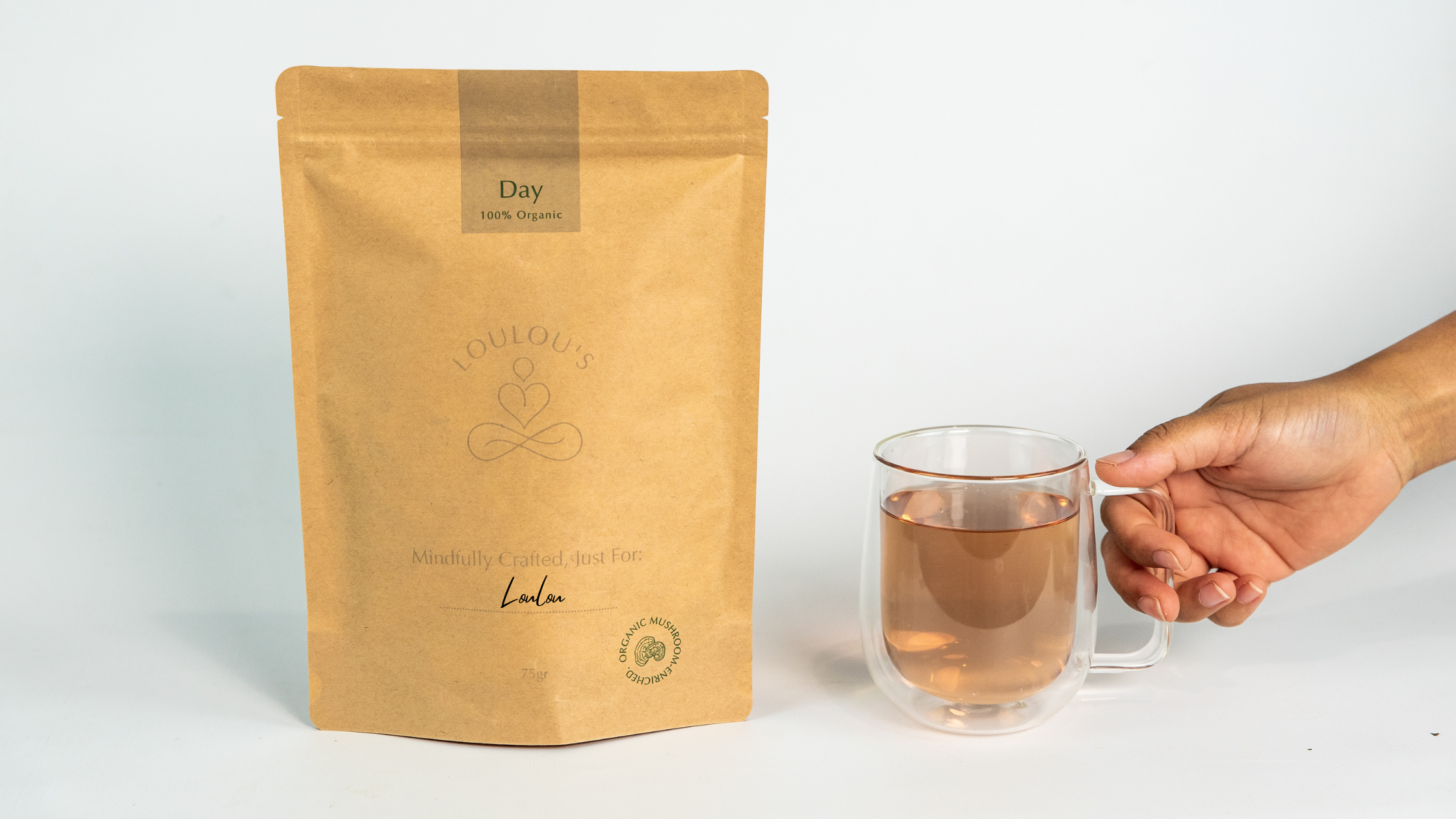
A caffeine-free Japanese mulberry leaf tea blended with lavender, lemon balm and rose petals. Every ingredient certified organic. Hand-blended in small batches on the Gold Coast.
Best for X, quick reference
- Best for racing thoughts: lavender + lemon balm
- Best for sleep onset (most evidence): valerian
- Best for gentle nightly ritual: chamomile or kuwanoha
- Best for anxiety-driven sleep loss: passionflower or lavender
- Best for post-dinner sleep (steady glucose): kuwanoha
- Best for sensitive palates: lemon balm or chamomile
How to brew sleep tea properly
Use one teaspoon of loose-leaf tea (about 2g) per 250ml cup. Bring water to 90 to 100 degrees Celsius. Steep for 4 to 5 minutes. Drink 30 to 60 minutes before bed. The timing matters as much as the cup itself.
Our pick: the most complete sleep cup we have found

The 8 teas above each do one thing well. The best sleep tea, in our experience, combines them.
We built Kuwanoha Bliss around exactly this insight. It is a caffeine-free Japanese mulberry leaf tea, hand-blended on the Gold Coast with the three ingredients that earned a place after reading all the research above:
- Lavender for racing thoughts
- Lemon balm for restless evenings
- Rose petals for a soft floral lift
Every ingredient is certified organic. The kuwanoha base comes directly from Japan. The supporting botanicals come from a trusted local Australian supplier. You can read the full breakdown and the reviews from over 1,000 Australian tea drinkers on our best herbal tea for sleep page.
Try Kuwanoha Bliss tonight and feel the difference by tomorrow morning.
A small honest closing note
Tea is one part of a sleep routine, not the whole thing. If you have chronic insomnia, see a clinician. If you are pregnant, breastfeeding, or on medication, check the ingredients of any blend with your healthcare provider. If you have tried five sleep teas and none have helped, the issue may be downstream of what is in the cup. Light exposure, screen use, evening caffeine, late meals and stress patterns all matter more than any herb.
But if your evenings need a signal, and you want a cup that has both the research and the tradition behind it, the eight teas above are the right place to start.
Frequently asked questions
Does sleep tea actually work?+
Yes, but more as a ritual amplifier than a sedative. The botanicals are gentle. The 30 quiet minutes around the cup, the warmth, and the consistency of drinking the same thing every night do a lot of the work alongside the chemistry. Expect a settled feeling, not knockout sleep.
What is the best sleep tea for anxiety?+
Lavender and passionflower have the strongest evidence for anxiety reduction. Lemon balm pairs well with both.
How long before bed should I drink sleep tea?+
30 to 60 minutes is the sweet spot. Earlier than that and the effect fades before bed. Later and you risk getting up to use the bathroom.
Are sleep teas safe to drink every night?+
Most are gentle enough for nightly use. Valerian is the one exception some clinicians advise cycling on and off after a few weeks. Caffeine-free Japanese teas like kuwanoha are safe for daily evening use.
Are sleep teas safe during pregnancy?+
Most are gentle, but mugwort, valerian and high-dose lavender extract have historical contraindications. Lemon balm, chamomile and mulberry leaf are generally considered safe, but always check with your midwife or GP first.
Why is a blended sleep tea better than drinking a single herb?+
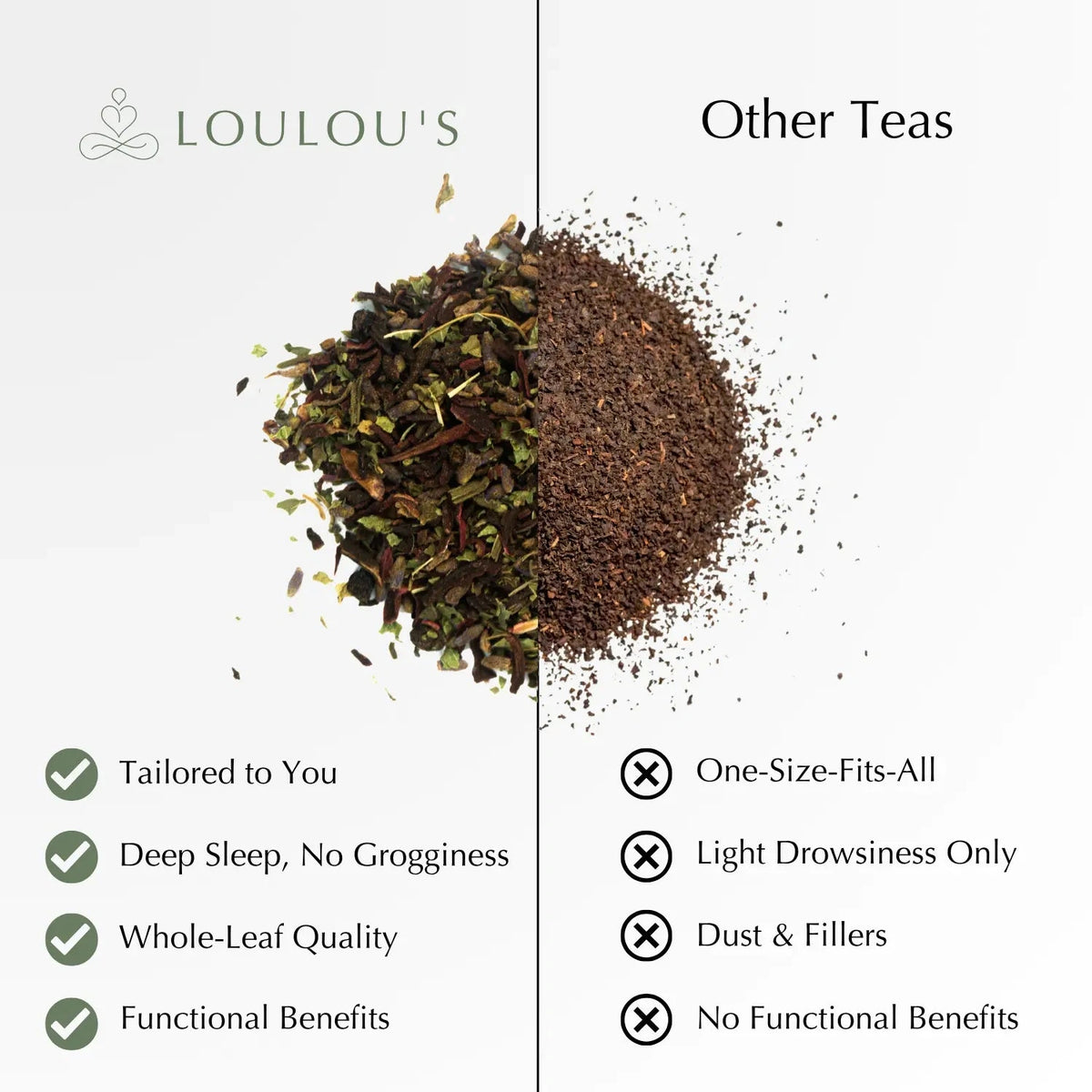
Each herb on its own does one thing well, but sleep is rarely a single problem. A racing mind, a restless body, post-dinner digestion and a slow nervous-system wind-down often all need attention in the same evening. A well-built blended tea gives your body small, complementary doses of several botanicals so the calming effect compounds without overpowering any single one. The taste also improves: single-herb teas like valerian or magnolia bark are difficult to drink alone, but balanced with lavender, lemon balm and mulberry leaf they become a cup you actually look forward to. Every ingredient in our blends is certified organic, hand-blended in small batches, with no fillers or added flavours. That is the difference between a herbal sleep tea you tolerate and one you reach for every night.
About the author
Loulou is the founder of Loulou's Tea. Every pouch is hand-blended in small batches on the Gold Coast, Australia, with certified-organic Japanese tea sourced directly from Japan and supporting botanicals from a trusted local Australian supplier.


Why This Humble Drink Is Your Most Powerful Ritual